
Best Time to Mulch in Wisconsin, by Soil and Region
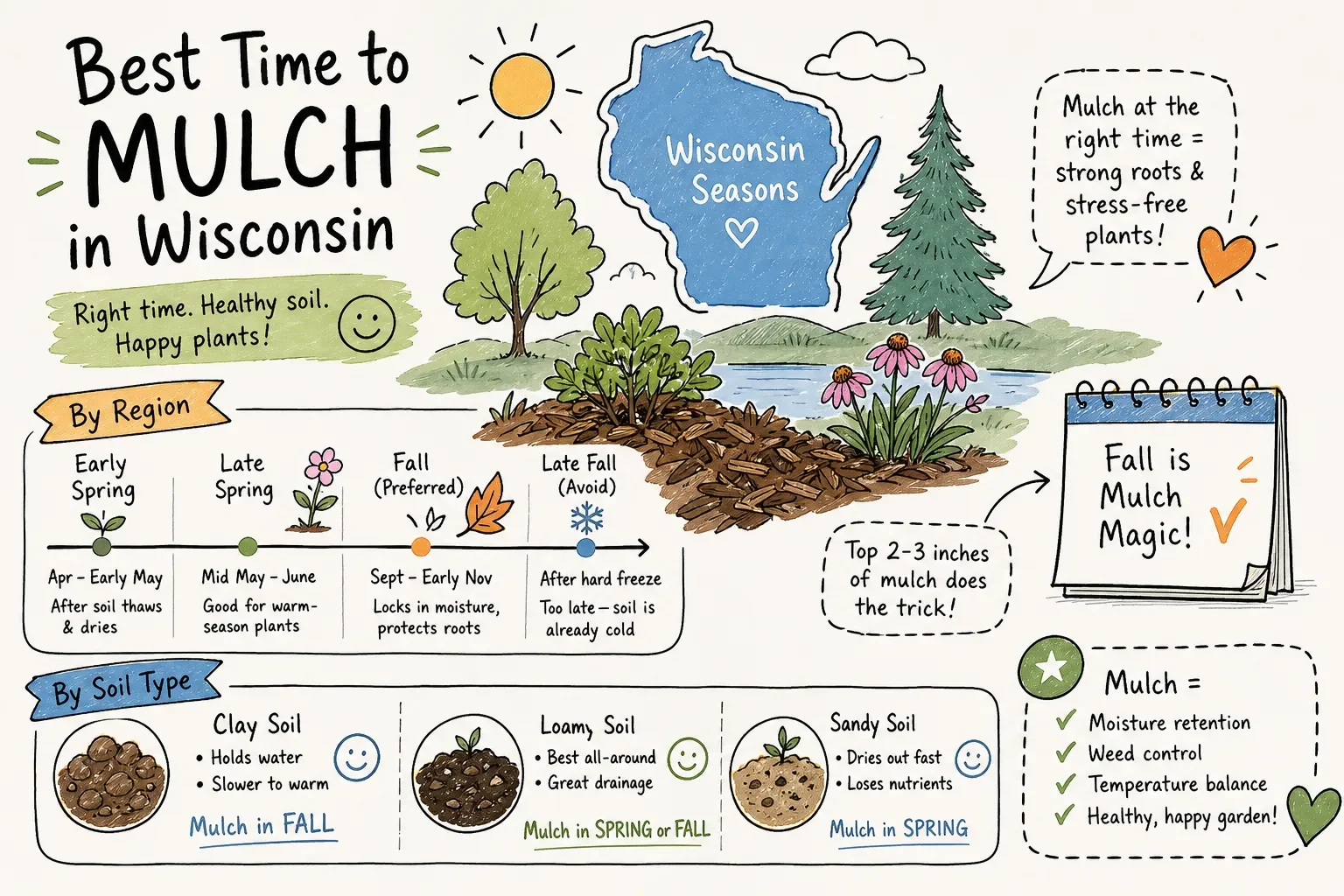
The best time to mulch in Wisconsin depends on your region and soil type, and most homeowners apply it too early. Many grab a bag of mulch the first warm weekend in April and call it done. The effort is real. The intention is right. But early application quietly costs you the whole season.
Mulching at the wrong moment can lock cold and moisture into your soil right when your plants are trying to wake up. It can give weeds a sheltered environment to germinate before your beds ever get a chance to breathe. And it can make you wonder why you spent the money at all. The material isn't the problem. The timing is.
This guide covers the actual seasonal windows for mulching in Wisconsin, broken down by region and soil type. Whether you manage your own beds or rely on a local Waukesha County crew like Everyday Landscaping WI to read the conditions for you, understanding when to mulch in Wisconsin is the first step to getting it to actually work.
Why mulch timing matters more than most people think
Mulch is not a cosmetic product. It's a soil management tool that works best when used at the right moment. The timing of your application determines whether mulch works with your soil or quietly against it.
The weed suppression benefit depends on applying mulch after the soil has warmed but before warm-season weed seeds get a foothold. Mulching over cold, barely thawed ground doesn't stop seeds already waiting beneath the surface. It shelters them. You've essentially tucked them in and closed the blinds.
The moisture retention benefit works the same way, just in reverse. Mulch insulates whatever condition the soil is already holding. Cold and wet soil in early April, covered with a fresh layer of bark mulch, stays cold and wet longer. That's not mulch failing. That's mulch doing exactly what it's supposed to do at exactly the wrong time. Apply it when the soil has warmed and you get the version everyone wants: steadier moisture, slower evaporation, and a root zone that handles heat without swings.
Best time to mulch in Wisconsin: frost calendar and regional timing
Wisconsin has a wide range of frost timing depending on where you live, and that range matters more for mulching than most guides acknowledge. Knowing your region's last spring frost date gives you a starting point, not a mulching date, but a marker for when the window begins to open.
Southern Wisconsin
In southern Wisconsin, including Waukesha County, Milwaukee, and Madison, the average last spring frost falls between late April and early May. Brookfield averages around April 26 and Waukesha city closer to May 7, according to UW Extension county climate data. These dates shift the entire timing discussion depending on your zip code.
Northern Wisconsin
In northeastern Wisconsin, the Green Bay area sees its last frost around May 5. Northern Wisconsin pushes into mid-to-late May, or later in colder inland spots. The farther north you go, the narrower your spring mulching window becomes.
Fall mulching runs in the opposite direction. The goal is to get mulch down after the ground begins to cool but before it freezes solid. In southern Wisconsin, that window typically lands in late October through November, after the first hard frost settles in. Farther north, where first frost arrives in late September to early October, you're working with a tighter window. The purpose of fall mulching is root insulation and reducing the freeze-thaw heaving that damages Wisconsin root zones each winter. Timing it after dormancy begins and just as the ground starts to freeze is what makes it effective.
How your soil type changes the entire timeline
Most mulching guides give you one date. UW Extension guidance effectively gives you two, and both are later than most homeowners expect. The reason comes down to soil type, which in Waukesha County alone can shift from sandy glacial deposits to heavy clay within the same neighborhood.
Sandy soils
Sandy soils warm up faster and drain faster. That combination means a sandy bed in southern Wisconsin can be ready for mulch as early as mid-May. The frost risk is mostly behind you, the soil is actively warming, and mulch applied at that point conserves heat rather than blocking it. If your beds drain well and you don't have standing water after rain, mid-May is a reasonable target for spring application.
Clay and loam soils
Clay and loam soils are a different story. Heavy clay holds moisture and warms slowly, sometimes several weeks behind sandy ground. UW Extension guidance points to mid-to-late June as the right window for heavier soils, which surprises most homeowners who think of June as late in the game. It isn't late. It's accurate. Mulching a clay bed in early May risks keeping the root zone cold and wet right when your plants need warmth to establish.
The soil temperature benchmark for mulching in Wisconsin: wait until the soil at a two-inch depth reaches around 50 degrees Fahrenheit before applying organic mulch in spring, a threshold referenced in UW Extension soil management resources. Apply before that mark and you're working against your plants, not for them.
Mulch depth and materials for Wisconsin beds
Once the timing is right, the next question is how much and what kind. Wisconsin's freeze-thaw cycles put real stress on plant material, and the right depth and material choice can either protect against that stress or add to it.
For growing-season application, UW Extension recommends these general targets by plant type:
Perennials: 2 to 3 inches during the growing season; 4 inches of loose, non-compacting material applied after the ground freezes for winter protection
Shrubs: 2 to 4 inches, kept away from stems and base crowns to prevent rot
Newly planted trees: 2 to 4 inches in a broad flat ring, never touching the trunk
Deeper is not better. Two to three inches does the job. Beyond that, you're reducing air circulation, inviting fungal issues, and creating conditions that favor pests over plant health.
For season-long beds, bark chips, chopped leaves, pine needles, and well-rotted compost all perform well in Wisconsin. Cedar mulch breaks down more slowly than hardwood bark, which helps it hold its depth longer and maintain weed suppression between seasonal refreshes. Hardwood bark adds organic matter to the soil more quickly as it decomposes, making it a better choice when soil building is the priority. For winter protection around tender perennials, choose loose, non-compacting materials: straw, pine boughs, or marsh hay. Apply winter mulch after the soil is frozen, not before, so it stabilizes cold temperatures rather than trapping warmth and delaying dormancy.
Mistakes that quietly cost you a whole season
Most mulching problems aren't product problems. They're timing and application problems. The two most common ones are predictable and entirely avoidable once you know what you're looking at.
Mulching before the soil is ready is the most widespread mistake in Wisconsin yards. Apply mulch to cold, wet ground in early spring and you've created a slow-warming environment right when your plants need heat to push through. UW Extension is direct about this: organic mulch applied too early keeps soil cold longer and slows plant growth. On clay and loam soils, that can mean weeks of unnecessary delay. The visible signs are subtle but real: plants that emerge slowly, beds that look fine but underperform all season.
The second problem is volcano mulching, where mulch gets piled against tree trunks or mounded high against shrub stems. This looks tidy from the street. In practice, it traps moisture against the bark, encourages rot at the base of the plant, and creates a sheltered environment for rodents and insects to overwinter close to your trees. The fix is simple: keep mulch flat and pulled back from crowns, stems, and trunks. A broad, even two-to-three-inch layer that stops an inch or two short of the plant base is always better than a deep pile that touches the wood.
When it makes more sense to let a local crew handle the timing
Tracking soil temperatures, frost dates, and drainage patterns across multiple beds takes more attention than most homeowners want to give it, and that's a reasonable position. A professional assessment takes the guesswork out of it by working with what's actually happening in your specific yard rather than a general calendar target.
A crew that knows Waukesha County, like Everyday Landscaping WI, can walk your beds, note what's draining well and what isn't, check what's already emerging, and apply mulch at the moment your yard is actually ready. That matters when you've got a mix of soil types across the same property, which is common in this area. Sandy spots near a slope may be ready three to four weeks before a clay-heavy shaded bed on the same lot. A single date doesn't serve that reality.
Homeowners who benefit most from professional mulch timing are those who know the task matters but don't want to manage it themselves: busy families in Brookfield and Pewaukee, longtime residents in Lake Country who've stepped back from physical yard work, new homeowners in Oconomowoc or Delafield still learning what their property's soil actually does. If your beds deal with recurring weed pressure or moisture problems despite regular mulching, timing is often the missing piece. Getting it right once, with someone who understands your specific conditions, tends to fix the problem going forward.
The bottom line on Wisconsin mulch timing
The best time to mulch in Wisconsin isn't a single date. It's a window that shifts based on where you live, what's in your soil, and what you're planting. For southern Wisconsin homeowners with sandy beds, mid-May is a solid target. Those working with clay-heavy ground should hold off until mid-to-late June. When to mulch in Wisconsin in the fall: aim for late October through November in southern Wisconsin, after the first hard frost but before the ground locks solid.
Get the timing right and mulch does exactly what it promises: fewer weeds, more consistent moisture, and a root zone that handles Wisconsin's temperature swings without the stress that shortens plant life and drains your maintenance budget. Get it wrong and you're spending money on material that holds cold in, shelters weeds, and leaves you with a false sense that the work is done.
If you'd rather skip the soil temperature tracking and let someone who knows Waukesha County handle the call, that option exists. Everyday Landscaping WI offers mulching and seasonal bed care across Waukesha County, Lake Country, and surrounding communities. Reach out when your yard is ready, or let Everyday Landscaping WI make that call for you.