
Improve Home Curb Appeal Fast: Your Weekend Yard Checklist
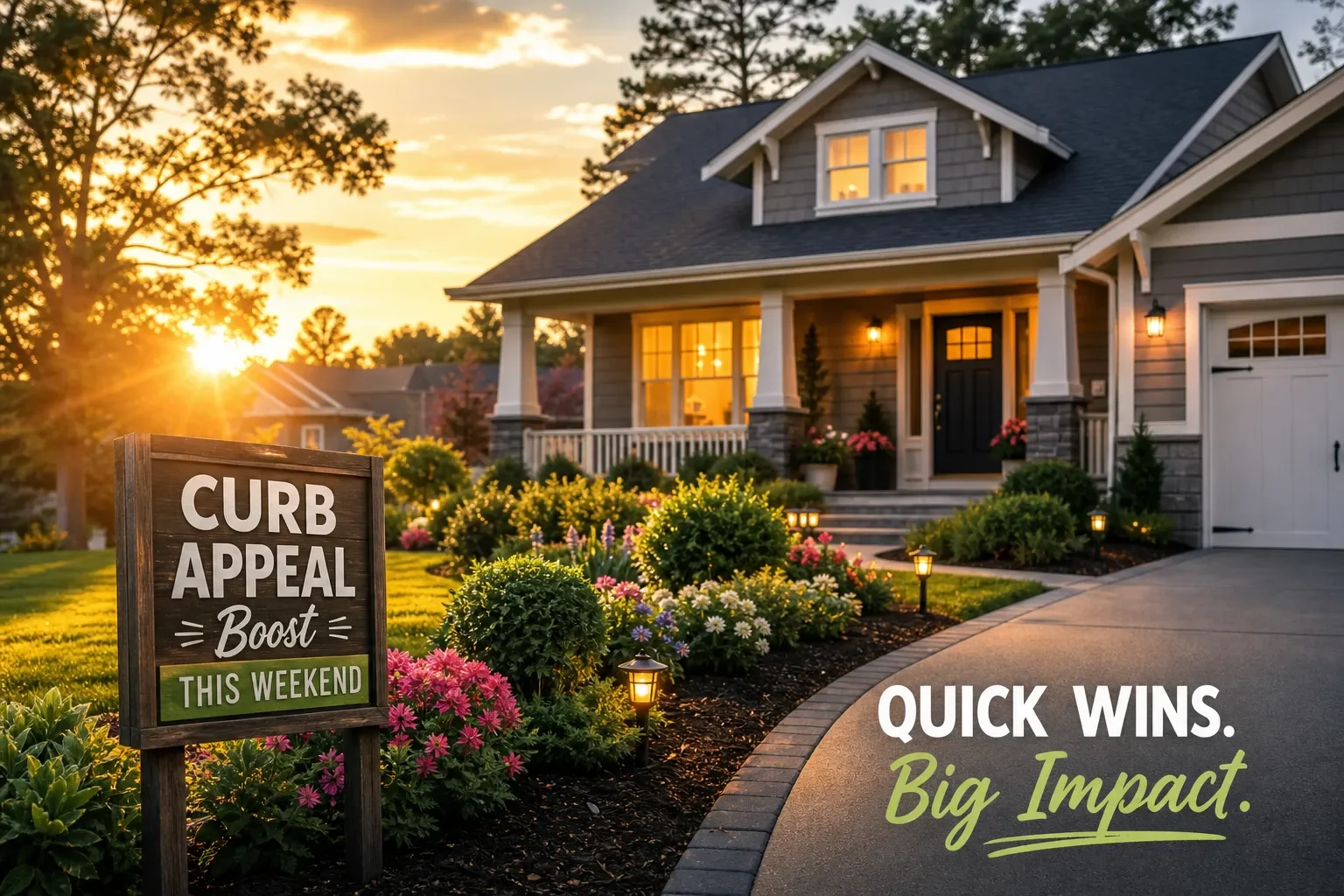
Buyers form a rapid first impression when they pull up to the curb, and your yard is doing most of that work. If you want to improve your home's curb appeal fast, the good news is you don't need a weeks-long renovation to get there. A focused weekend of the right landscaping tasks, done in the right order, can shift a property from overlooked to genuinely impressive.
The key word is "right." Not every yard project delivers equal visual return for the time you put in. This checklist covers the highest-impact tasks in priority order, with realistic costs and time estimates so you can pick what fits your weekend and your budget. At Everyday Landscaping WI, we run this exact fast-track process for homeowners and sellers across Waukesha County who need results before photos go live or the weekend slips away.
How to improve home curb appeal fast: start with fresh mulch
Fresh mulch is one of the highest-impact, fastest ways to make a front yard look intentional. It unifies the beds, creates color contrast against green plantings and the lawn edge, and signals to anyone looking at the property that someone cares about this place. Very few tasks you can complete in an hour produce the same visible return, which is why it tops every weekend curb appeal project list worth following.
How much mulch you actually need
Measure the square footage of your front bed, then multiply by the depth you want (2 to 3 inches is the standard). A 100-square-foot bed at 3 inches needs about 12 to 13 bags of 2-cubic-foot mulch, which runs roughly $55 at $3 to $5 per bag. A 200-square-foot bed at 3 inches needs around 25 bags, or you can order 2 cubic yards delivered for $60 to $100 and skip the trips back and forth from the store.
What type of mulch looks best on a front yard
For curb appeal purposes, many landscapers in the Midwest prefer dark hardwood mulch for the contrast it provides in photos and against green plantings. It tends to hold its color well through the season and reads as clean and deliberate from the street. Cedar mulch is a solid second choice and adds a pleasant scent, though prices vary by supplier and often run a bit higher than basic hardwood. Colored dyed mulch works if it matches your home's palette, though it can look artificial in photos if the color is too intense. Dark brown or black hardwood is generally the safest pick for a clean, polished result.
Quick curb appeal ideas: the application steps that separate a clean job from a messy one
Pull existing weeds first, then edge the bed before you apply anything. Spread mulch at 2 to 3 inches deep and keep it 2 to 3 inches away from plant stems and tree trunks, a commonly recommended practice to prevent moisture buildup and rot. A standard front-yard bed typically takes 1 to 2 hours from start to finish. You can have this done before lunch on a Saturday and move on to the next task in the afternoon.
Weed removal and bed edging: the detail that makes everything else look better
Fresh mulch sitting in weedy, undefined beds still reads as neglected. Weed removal and a clean edge are the prerequisite steps that multiply the visual impact of every other task on this list. Think of them as one sequence, not two separate jobs.
How to pull weeds fast and keep them from coming back
The best time to pull weeds is after rain or after you've watered the bed, when the soil is loose and roots release cleanly. Use a hand weeder for tight spots around plants and a hoe for open ground in larger beds. If your beds are chronic weed producers, lay a weed barrier layer under the new mulch before you spread it. That upfront investment of time, roughly 20 minutes for most front beds, can meaningfully reduce hand-pulling for the rest of the season.
Why bed edging is worth the extra 30 minutes
A clean, defined edge between the grass and the bed is one of the lowest-cost, highest-visibility details in the entire yard. A manual edging tool runs $20 to $50 and lasts for years. For geometric beds, cut a straight line; for natural beds, use a smooth, consistent curve. The before-and-after difference is striking, and it takes 1 to 2 hours for a typical front yard. When potential buyers look at a property, a clean edge tells them this yard is maintained, not just mowed.
Shrub and hedge trimming: the task many sellers overlook
Overgrown shrubs are one of the most common reasons a yard looks neglected even after a cleanup. They creep into walkways, block windows, and lose their original shape until the whole front of the house feels heavy and dark. A clean trim can make a home look years newer without changing a single thing about the structure itself.
The fast-shaping approach that works without a landscaper
Start by removing dead or damaged wood with bypass hand pruners before you reach for any shears. Then shape from the outside in. For formal hedges like boxwood, manual hedge shears give you the most control and the cleanest cut on fine foliage. For larger hedges or longer rows, a cordless electric trimmer is faster and still produces a professional result. Keep flat hedges flat on top and taper slightly wider at the base so the lower branches get light. Budget 2 to 6 hours depending on how much you're working with.
When a shrub needs removal instead of a trim
Not every overgrown shrub can be saved with a haircut. If the lower stems are bare wood with no foliage, if branches are crossing the front walk or blocking ground-floor windows, or if the plant is completely out of scale with the bed, it reads as a problem to buyers. Trying to trim it into shape often makes it look worse. Removing it entirely and replacing it with something appropriately sized is usually the better choice before a listing, and it's one of the services our team at Everyday Landscaping WI handles regularly for sellers who need a fast reset.
Yard cleanup and quick exterior wins that tie it all together
Once the landscaping is clean, a few fast exterior fixes compound the visual improvement significantly. These tasks take the property from "tidy yard" to "move-in ready home" in the eyes of buyers and visitors. Prioritize them in this order: power washing, front door, planters, then lighting.
Power washing walkways and the driveway
A pressure washer rental costs $30 to $60 for a half-day, and the transformation on a concrete driveway or walkway is immediate. Clear the area first, then work from the highest point downhill so dirty water runs away from areas you've already cleaned. Keep the wand moving in smooth, overlapping passes and stay 12 to 24 inches from the surface to avoid etching. Wear eye protection. Wet concrete gets slippery fast, so step carefully as you work. Plan this as a morning task so surfaces are dry by afternoon.
Front door paint, hardware, and planters: the entry trifecta
A freshly painted front door costs $25 to $70 in materials and takes 2 to 3 hours including prep and a second coat. Choose a bold but coordinated color that works with your siding and trim rather than something random. Pair the new paint with updated house numbers and a couple of potted seasonal plants at $15 to $75 each, and you've created a focal point that draws the eye toward the entry and away from anything less polished. This combination is one of the most cost-effective affordable curb appeal upgrades you can make to a façade.
Outdoor lighting for after-dark curb appeal
Many buyers drive by properties in the evening before scheduling a showing. Entry sconces are the highest-return lighting upgrade because they frame the door and create immediate symmetry. If you're replacing an existing fixture on an existing junction box, this is a straightforward DIY swap: shut off the breaker, disconnect the old fixture, connect the new one, and mount it. For path lighting, solar fixtures are the easiest install since they require no wiring. Space them every 6 to 8 feet along the front walk and use warm white bulbs in the 2,700K to 3,000K range to keep the look welcoming rather than clinical.
How to prioritize these weekend curb appeal projects by time and budget
Not every reader has a full weekend free or $500 to spend. Two plans cover most situations, pick whichever fits your schedule.
Affordable curb appeal tips: the under-$200 Saturday plan
Do the mulch refresh, weed pull, and bed edging first, then add one potted planter at the entry. Total time is 3 to 5 hours. Total cost lands between $75 and $150 depending on bed size and plant selection. This is the right plan for a property that needs freshening rather than a full reset, and it delivers the biggest landscaping impact per dollar of anything on this list.
The full weekend $300 to $500 refresh
Spread across Saturday and Sunday, the complete sequence covers mulch, edging, weeds, shrub trimming, power washing, front door paint, planters, and path lighting. Budget 8 to 12 hours of work and roughly $300 to $500 in total materials, with a detailed budget coming in around $430 for a complete front-of-house refresh. This is the plan for sellers preparing for photos or showings who want the yard to look its best top to bottom.
When the weekend isn't enough: how Everyday Landscaping WI handles this fast
Some properties need more than a Saturday afternoon, and some homeowners simply don't have the time, equipment, or physical capacity to tackle a full curb appeal refresh on their own. That's exactly what our team at Everyday Landscaping WI is built for.
What Everyday Landscaping WI takes off your plate in one visit
We handle mulching, weed pulling, bed edging, shrub trimming, shrub removal, and yard cleanup as a focused, fast-turnaround service for homeowners and sellers across Waukesha County and Lake Country. As a woman-owned local business rooted in this area, we bring firsthand knowledge of local soil conditions, seasonal timing, and the specific demands of southeastern Wisconsin properties. A professional crew can typically complete in one visit what many homeowners spread across several weekends. We communicate clearly at every step so you're never left wondering what's happening with your property.
Who gets the most value from hiring a local crew
Our clients for this kind of work tend to fall into a few clear situations. There's the seller who needs the yard looking sharp before the photographer arrives on Friday. There's the homeowner who physically can't manage the mulching and trimming anymore and wants someone reliable who will show up and do the job right. And there's the new homeowner who inherited an overgrown property and needs a team to help reset the whole outdoor space before they start maintaining it themselves. If any of those situations sound familiar, Everyday Landscaping WI is a straightforward call to make.
Improve home curb appeal fast: work the list this weekend
The logic of this checklist is simple: start with mulch and edging because they have the highest visual return per hour, add shrub trimming and yard cleanup to remove the obvious problems. Then layer in the exterior quick-wins to finish the picture. To improve your home's curb appeal fast, you don't need a full landscape renovation, you need the right tasks done in the right sequence.
Curb appeal improvements consistently rank among the better-performing investments you can make before a sale. According to the National Association of Realtors, landscaping upgrades regularly recoup a significant portion of their cost at resale, and a clean, polished front yard creates visible value the moment someone pulls up. Whether you're spending a Saturday on the front beds yourself or calling a crew to handle the whole project, the return is real and immediate.
If you're in Waukesha County and want to improve home curb appeal fast without giving up your whole weekend, reach out to Everyday Landscaping WI. We'll assess what your property needs and get it done before your listing goes live or your guests pull up to the curb.